

⏰ Damn It, Margaret Atwood
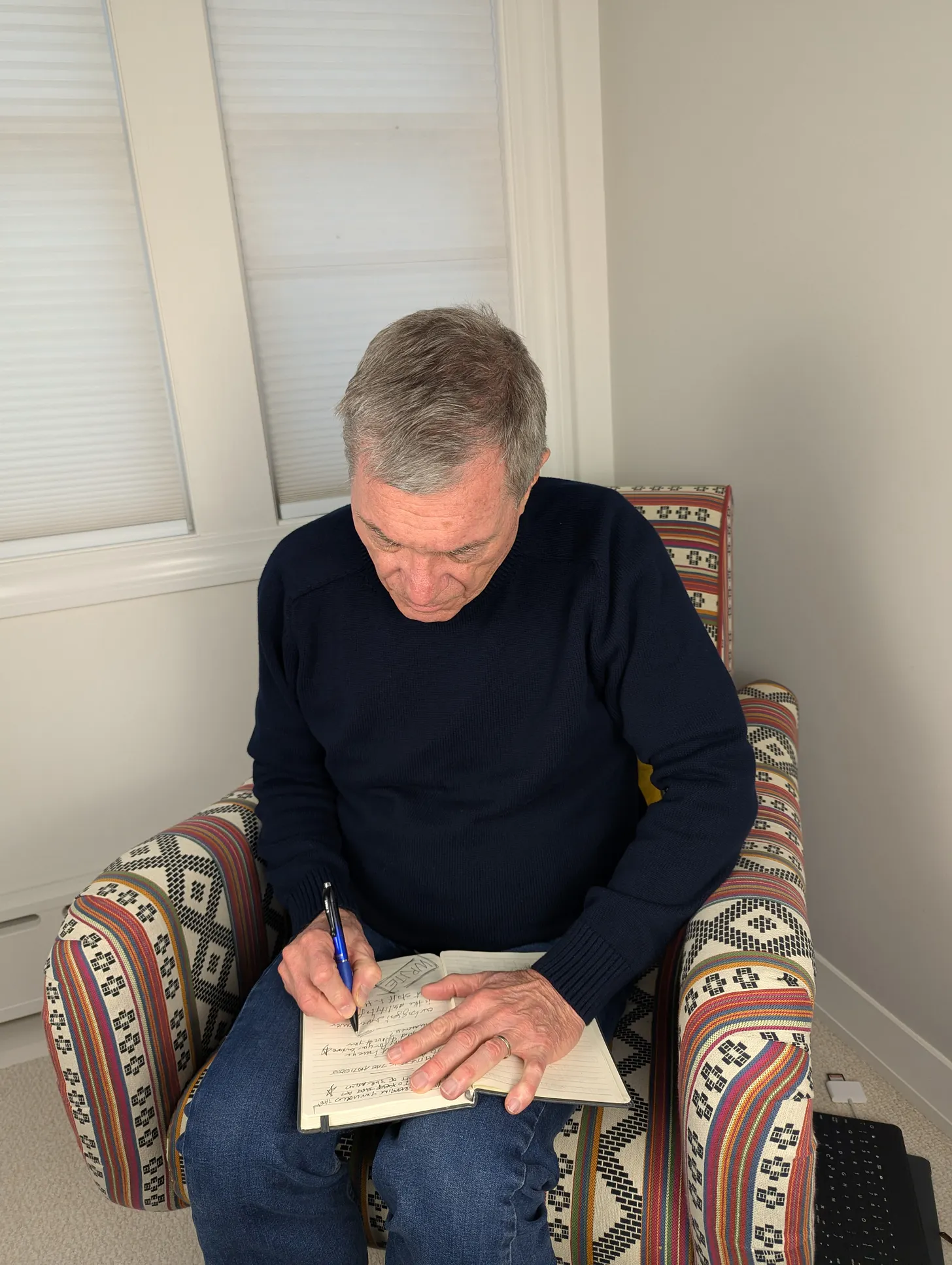
As I work to become a writer, I have focused more on reading what others have written about writing. Like this:
“The only way you can write the truth is to assume that what you set down will never be read. Not by any other person, and not even by yourself at some later date. Otherwise, you begin excusing yourself.” — Margaret Atwood (1939), “The Blind Assassin”
Ouch!
Somewhere in a prior issue, I believe I’ve made the point that the purpose of my writing is for me to better understand who I am, who I am becoming, and who I want to become. If you benefit along the way, great! By actually publishing what I am writing, I need greater precision in what I say and how I say it than if I write in a journal or something like that, where nobody else but me will see it. And to achieve that greater precision, I need to understand my thoughts (and what is behind them) with greater clarity. Bingo!
There are a number of things that seem to be conspiring against this. First, I’ve discovered that “excusing yourself”, to use Margaret’s words, comes in layers. One level of this is basic “imposter syndrome”. The idea of: Who am I to think that I have something of value to say to the world? It is a very real thing for most anyone who is growing. It does not just affect writers. Whether you are a business owner, a mid-level manager, a stay-at-home Mom, or pretty much anyone in between, if you are growing and trying to wake up, then imposter syndrome is something that most have to contend with. The most common fear is that people will discover we don’t know what we are doing. (And, of course, as we all know, we don’t!) In my case, this fear is something I am no longer willing to indulge. If I have a hope for you as a reader, it is that you will find what I am writing to be authentic and vulnerable, and that by doing that, it will awaken something in you that you decide to respond to. But this is the “easy” level to identify and address of “excusing yourself”.
The more difficult layer is “excusing yourself” for not being willing to say the thing(s) we are afraid to say to ourselves, to acknowledge that they even exist, in spite of the massive evidence floating around right in front of our eyes, which we are not seeing because we are “asleep” (and usually because we prefer it that way).
Margaret also talked about writing “the truth” and, for me, “the truth” is not a relative sort of thing, it is an absolute. For something to be a valid truth it needs to be true for everyone, regardless of their circumstances. My goal in writing, actually, is not to do that. It is to uncover who I am, who and what I am becoming and what I want to become. It is about how the various truths (which are also called principals) in life express themselves through me and I don’t know that I need to put actual words on those various truths to allow that to happen. For me, the overriding question is not “what is true?”, but “what is useful?” Having said that, to write about the things that I want to avoid, not because of what you as a reader might think, but because of what I don’t want to think about is a much tougher layer of “excusing yourself”. I’m not even sure I know what those things are and if I am blind to them how to uncover them? You can’t wake yourself up when you are asleep. But, to quote the late Jim Rohn and popularized by Tony Robbins, “Success leaves clues.” In the same way, I think the excuses we are blind to also leave clues and those we should be able to look for and find. So, what would these clues look like?
Anger and frustration. Anxiety. I am sure there are others, but these represent a very fertile field! Now, while I am sure none of those who read this suffer from any of these things, I do. And, as I think about it, there are things that I find frustrating, anxiety producing or anger generating that did those same things to me 50 years ago. Hmmm! So, for sure, those are clues (and not subtle ones either!)
There are so many things that can trigger one of these emotional responses in me, but most of them can be summarized this way: I want the world to be a certain way and it isn’t. And I am refusing (consciously or otherwise) to accept that. So, these are all grounded in lack of “acceptance”.
In my mind, lack of acceptance is not necessarily a bad thing. I remember reading years ago a book in which the author pointed out that anger can be healthy. It can be the result of a passionate desire for things to be better/different than they are. That is not grounded in some selfish, self centered perspective. (I think frustration and anxiety probably can also be viewed similarly, though the emotional mechanisms which cause anxiety are, to my way of thinking, different than anger and frustration.) So, some of my emotional responses may be selfless, but some of them are certainly self centered as well. Trying to keep the appropriate perspective and balance requires effort and I can already hear self-talk “excuses” floating into my awareness around all of this. And if that is the case, then focusing on the clues was the solution to bringing what I was asleep to into my awareness. Which is another small step of waking up.
If excuses leave clues, then so does anything else that is out of your awareness that you are avoiding. So instead of ending with some neat insight, I will leave you with a single, broader question. It is the one I am dealing with myself: What will you have to face if you stopped excusing yourself?
If you found this issue helpful and want to hear more from Greg, be sure to subscribe to his podcast, Pants Around Ankles Prevention, where each episode delivers a punch of truth to help you wake up, gain perspective, and live with greater clarity and purpose. Listen and subscribe now on Apple Podcasts or YouTube.
This issue was originally published by Greg Hayne on Substack.